
The best towns in Portugal for families: schools, safety and community
 PauloPortugal relocation advisor
Updated July 2026
11 min read
PauloPortugal relocation advisor
Updated July 2026
11 min read
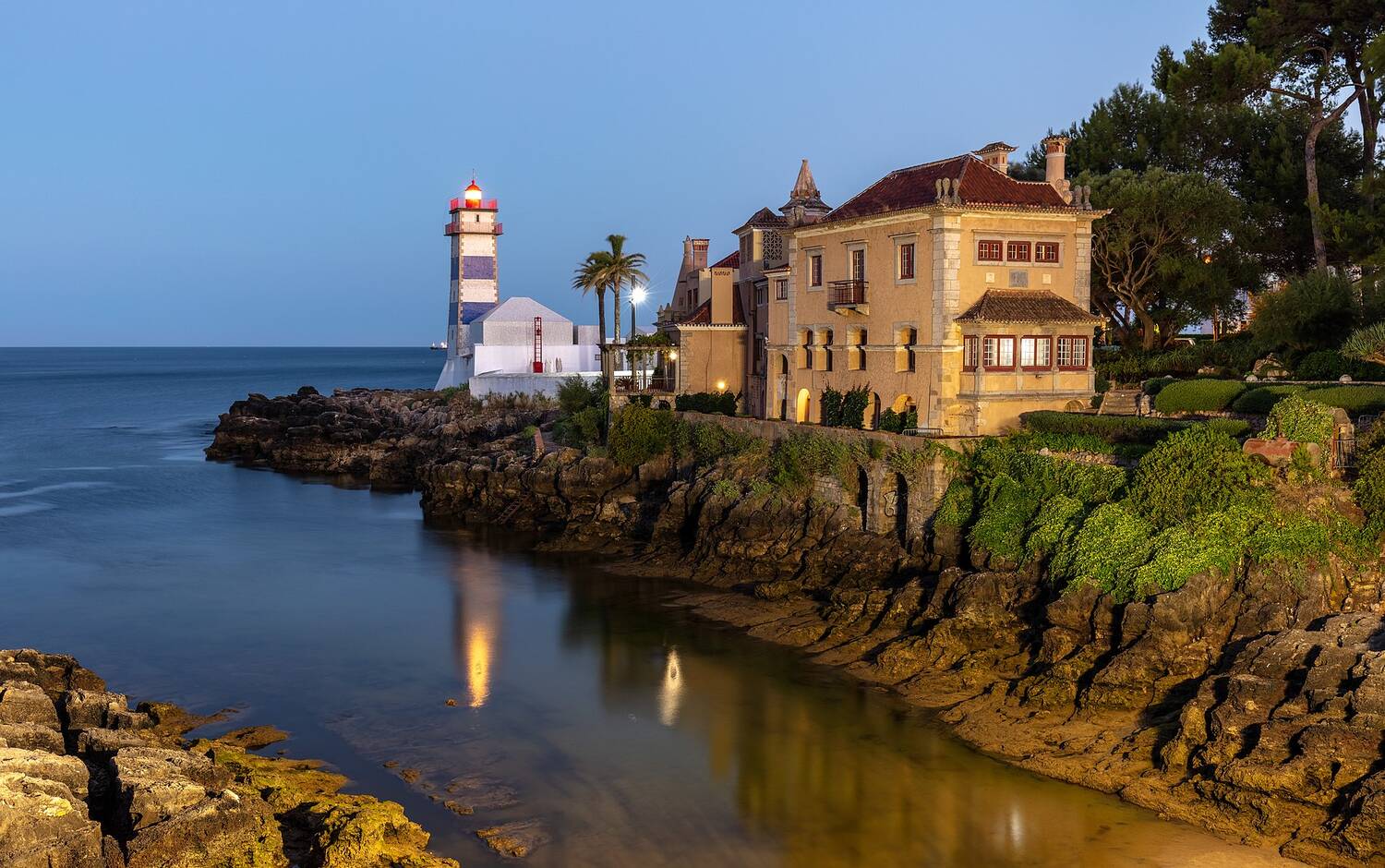
Portugal is not one lifestyle. Cascais feels like an international suburb of Lisbon. The Algarve feels like a permanent holiday with a school run built in. Porto feels like a smaller, calmer city. Which one suits your family has less to do with Portugal and more to do with what you actually need.
On our discovery calls, the first question is rarely "is Portugal safe for kids". It is almost always "which town". So this guide pulls together what we actually know: how safe these towns are by the numbers, where the schools are strong, what healthcare access really looks like, and roughly what a home costs in each area.
- Portugal ranked 7th safest country in the world in the 2026 Global Peace Index, and 6th safest in Europe.
- Violent and serious crime fell nationally in 2025, and fell further in the Lisbon district specifically, though overall reported crime (which includes lower-level offences) ticked up, according to Portugal's official internal security report.
- Cascais and Oeiras carry the biggest property premium of the family hotspots, running well above the national median per square metre in 2026.
- Strong international schools exist in every region we cover here: Lisbon's coast, Porto and the Algarve, each with a long-established option.
- The Golden Visa's real-estate route ended in October 2023, so buying a family home in these towns does not, on its own, grant residency by investment.
Safety is one reason families move here. It is rarely the only one.
How safe these towns really are
Safety is usually the first thing families ask about, so let's start with the data rather than the impression. In the 2026 Global Peace Index, published by the Institute for Economics and Peace, Portugal placed 7th safest country in the world, with a score of 1.427, and 6th safest in Europe, behind Iceland, Switzerland, Slovenia, Ireland and Austria. Separately, International Living's 2026 "Safest Places to Retire" index named Portugal the world's safest country for retirement, pointing to that same Global Peace Index ranking and its low crime rate. Worth flagging: that is a different ranking from International Living's broader "best place to retire overall" list, where Portugal is not currently first, so we would not stretch the safety data further than it goes.
Portugal's own government backs this up with harder numbers, though the most recent report shows a more mixed picture than in prior years, and we would rather be straightforward about that than cherry-pick the flattering half. The 2025 Annual Internal Security Report (RASI), published in early 2026, recorded 365,802 crimes reported nationally, up 3.1% year-on-year. Violent and serious crime moved the other way, falling 1.6% to 14,149 reports, the continuation of a longer downward trend. In the Lisbon district itself, home to Cascais, Oeiras and Sintra, violent and serious crime fell 3.4%, even as overall reported crime (which includes lower-level offences such as theft) rose by roughly 4%. None of this means every neighbourhood is identical, and we always encourage families to walk a street at different times of day before they commit. The direction on violent crime specifically remains positive; the rise in the overall count, nationally and in Lisbon, is the kind of shift worth watching rather than glossing over.
Where families are actually settling
Portugal's foreign resident population has been growing quickly, which tells you something about where the demand for family-friendly towns is coming from. By the end of 2025, foreign residents reached 1,597,539 people, or 14.0% of the resident population, up from 1,543,697 a year earlier. Portugal issued 386,463 residence permits in 2025 alone, roughly a 64% jump over the 236,030 issued in 2024. Most of that growth clusters around a handful of places, and for good reason.
- Cascais and Estoril. The classic choice for international families around Lisbon: coastal, well connected, with the deepest concentration of established international schools of anywhere in the country.
- Oeiras and Carcavelos. A calmer, slightly more residential alternative right next door to Cascais, popular with families who want the same commute and school access without quite the same price tag, or the same crowds in summer.
- Porto and its coast. A smaller, more compact city with its own long-standing international school scene, generally a gentler cost of living than the Lisbon coast, and an easy relationship with the Atlantic and the Douro valley.
- The Algarve. Spread across towns like Lagoa, Almancil and Loulé, with a large, well-established international school and a lifestyle built around the beach and the outdoors.
Schools, town by town
Every one of these regions has at least one long-established, well-regarded international school, and that kind of continuity is what families want most before they commit to an area.
| School | Town / area | Established | Notes |
|---|---|---|---|
| Carlucci American International School of Lisbon (CAISL) | Linhó, near Sintra / Cascais | 1956 [1] | Oldest American school in the Iberian Peninsula and the only U.S. State Department-sponsored school in Portugal; fees from about €11,716 to €22,736 a year [2] |
| CLIP – Oporto International School | Porto | 1990 [3] | Largest and most internationally diverse school in Porto, around 1,000 students on a 25,000+ sqm campus, Cambridge IGCSE / A-Level curriculum [3] |
| Oporto British School | Porto | 1894 [4] | Oldest British school in continental Europe |
| Nobel Algarve British International School | Lagoa, with a second campus in Almancil | 1972 [5] | Portugal's largest private school, 1,400+ students from more than 50 nationalities, UK curriculum (IGCSEs / A-Levels) [5] |
Fee figures like CAISL's come from third-party aggregators rather than the school's own current fee schedule, so treat them as a starting point and confirm the exact numbers directly with the school's official fee schedule before you budget around them, since fees are typically reviewed every year. The same goes for admissions timelines: the strongest schools in Cascais and around Lisbon tend to have waiting lists, so it is worth applying well before your move date.
Not sure which town fits your family?
On a free discovery call, we match your budget, your children's ages and your priorities to the right area and the schools that actually fit, before you commit to anything.
Book a discovery call Free consultation. No obligation.Healthcare access for families
This is a part of the picture families often overlook until they arrive, so let's be upfront about it. In 2025, 1.56 million patients across mainland Portugal, 14.5% of everyone enrolled in the public health service (SNS), were without an assigned family doctor, an increase of 41,000 on the year before. The Lisboa e Vale do Tejo region, which covers Lisbon itself along with Cascais, Sintra and Oeiras, accounted for roughly 1.1 million of that 1.56 million nationally.
This is not a reason to avoid Cascais or Oeiras. It is simply a reason to plan for private health insurance alongside the SNS from the start, a step most of the families we work with end up taking regardless of which town they choose.
What Cascais, Oeiras and the coast actually cost
Property prices along the Lisbon coast carry a real premium, and it is worth going in with your eyes open. According to idealista's municipality-level house price map, Cascais runs at roughly €5,000 to €5,700 per square metre and Oeiras at roughly €4,500 to €4,700 per square metre, against a national median of €2,337 per square metre in the first quarter of 2026, itself up 19.8% year-on-year. Exact figures shift by quarter and by which data provider you look at, so treat these as a guide rather than a quote.
| Area | Typical price | vs national median |
|---|---|---|
| Cascais | ~€5,000 – €5,700 / m² | More than double |
| Oeiras | ~€4,500 – €4,700 / m² | Roughly double |
| National median | €2,337 / m² | Up 19.8% year-on-year |
We do not have equally granular, recent per-square-metre figures for Porto's coastal suburbs or the Algarve's family towns, so rather than guess, we will say this qualitatively: both regions generally sit below the Cascais and Oeiras premium, which is part of why families weighing school access against budget often end up looking seriously at Porto or the Algarve as well as the Lisbon coast.
Visas and tax notes for 2026
Two things have changed recently enough that older articles about moving to Portugal can be misleading, so precision matters here. As of 2026, Portugal's tax regime for new arrivals is IFICI, often called "NHR 2.0" (see this plain-English explainer for a walkthrough). The old, broad NHR scheme officially ended on 1 January 2025. IFICI is narrower: a 20% flat rate for a non-renewable 10-year period, restricted to highly qualified professionals working in science, technology, innovation and education. If you already held NHR status before it ended, you keep your original benefits for the rest of your original 10-year window, but new arrivals now fall under the IFICI rules instead.
Second, if buying a family home in Cascais or the Algarve is part of a wider residency plan, know that the Golden Visa's real-estate investment route, along with the old €1.5 million capital transfer option, was removed in October 2023 under the "Mais Habitação" law (Lei n.º 56/2023), summarised in plain English here. The routes that remain in 2026 are investment funds from €500,000, job creation and cultural donations. Buying a home in a family-friendly town is a great decision on its own merits, but it no longer opens a path to the Golden Visa by itself. Both of these areas are individual and change, so please treat this as a starting point and confirm your specific situation with a licensed tax adviser or immigration lawyer, ideally before you commit to a purchase.
What to plan for
A few honest, practical notes, so nothing catches you off guard:
- Apply to schools early. The strongest schools around Cascais and Lisbon fill up, so where you buy and when you apply go hand in hand.
- Budget for private healthcare on the Lisbon coast. Given the SNS family-doctor gap concentrated in Lisboa e Vale do Tejo, most families in Cascais and Oeiras carry a private plan alongside the public system.
- Know what the premium buys you. Cascais and Oeiras cost well above the national median; make sure that trade-off, proximity to Lisbon and its schools, matches what your family actually needs.
- Get personal advice on visas and tax. IFICI and the Golden Visa rules have both changed recently and depend on your individual circumstances, so this is not the place to rely on last year's blog post.
Ready to find your family's town?
We help international families buy the right home, in the right place, near the schools that fit. One dedicated team, from first viewing to the keys.
Book my discovery call Free consultation. No obligation. Your details stay private.Common questions
There is no single right answer. Cascais and Oeiras offer the deepest concentration of established international schools and easy access to Lisbon, at a real price premium. Porto offers a similar international school scene at a gentler cost. The Algarve, around Lagoa and Almancil, combines Portugal's largest private school with a lower-cost, outdoor lifestyle. We map your budget and priorities to the right one on your discovery call.
By the data, yes, with some nuance. Portugal ranked 7th safest country in the world in the 2026 Global Peace Index, and its own official security report recorded a 1.6% fall in violent and serious crime nationally in 2025, with a 3.4% fall in the Lisbon district specifically, even though overall reported crime (which includes lower-level offences) rose slightly both nationally and in Lisbon. As with anywhere, we still recommend visiting a neighbourhood at different times of day before you commit.
Many families choose to have it. In 2025, about 1.1 million of the 1.56 million patients nationally without an assigned SNS family doctor were in the Lisboa e Vale do Tejo region, which includes Cascais, Sintra and Oeiras. Most relocating families build a private plan into their budget alongside the public system.
No, not since October 2023. The Golden Visa's real-estate investment route was removed under the "Mais Habitação" law. The routes still available in 2026 are investment funds from €500,000, job creation and cultural donations. A home purchase in a family-friendly town is still a great move, just not one that leads to the Golden Visa on its own. Speak to a licensed immigration lawyer about what applies to you.
Paulo has spent his career in property across Lisbon and London, and founded GetCasa to give international buyers the independent survey, legal and financing standards he would expect for himself. GetCasa is a licensed real-estate mediator in Portugal (AMI 24277).