
The D7 visa explained: the passive-income route to living in Portugal
 PauloPortugal relocation advisor
Updated July 2026
10 min read
PauloPortugal relocation advisor
Updated July 2026
10 min read
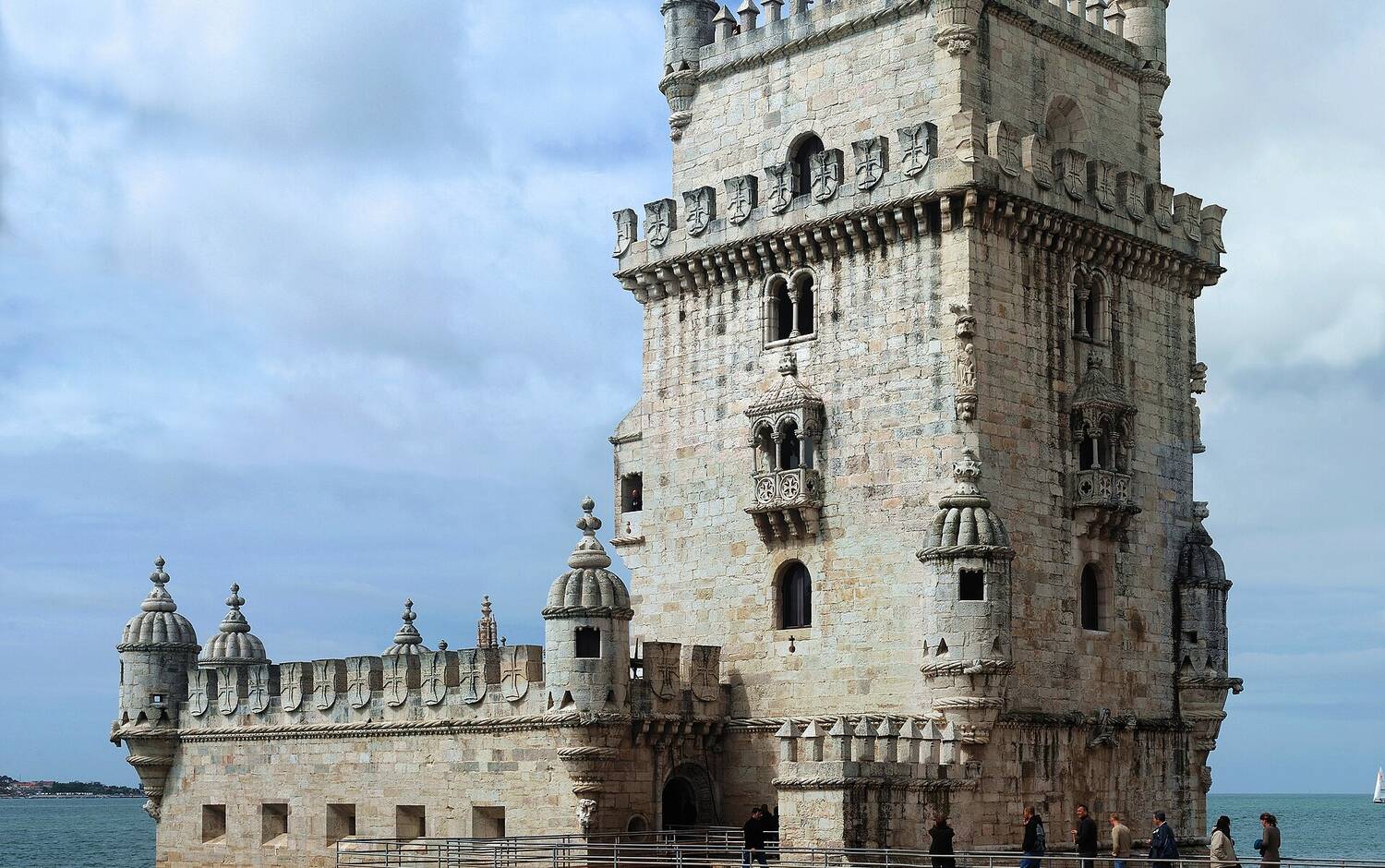
If you have a reliable income that arrives whether or not you go to work, a pension, rental income, dividends, then the D7 visa is very often your simplest, calmest route to living in Portugal.
It comes up on almost every call we have with retirees and near-retirees, and with anyone who has built up steady passive income and wants to trade it for sunshine and a lower cost of living. The D7 is not the flashy one you read about in the headlines. It is the quiet, sensible one. Below is what it actually asks of you in 2026, how it differs from the D8 digital nomad visa, and the tax and timeline changes you genuinely need to know about before you fall in love with the idea.
- The D7 is for passive income: pensions, rent, dividends and similar. You need at least the Portuguese minimum wage, which is €920 a month (about €11,040 a year) in 2026.
- Add for family: the required income rises by 50% for a spouse and 30% for each dependent child, on top of your own amount.
- Savings matter too: you are typically expected to show around 12 months of that income (roughly €11,040 for a single applicant) in a Portuguese bank account.
- The permit runs 2 years, then renews for 3, with permanent residency possible after 5 years of legal residence.
- Two rules changed recently: the old NHR tax break no longer helps most retirees, and the citizenship timeline moved from 5 to 10 years under the 2026 nationality law. Both are worth confirming for your own case before you rely on them.
That figure is pegged to Portugal's minimum wage, so it rises a little every January. Always check the current year before you plan around it.
What the D7 actually is
The D7 is a residence visa for people who can support themselves in Portugal from a stable, passive income. That is the key word: passive. It is designed for income that keeps arriving without you clocking in, most commonly:
- Pensions, state or private. This is the classic D7 profile.
- Rental income from property you own, at home or elsewhere.
- Dividends and other investment returns.
- Other steady passive returns you can document over time.
Because it leans on income rather than a large lump-sum investment, the D7 is often the most accessible residency route for retirees and financially independent people. It is a real residence permit, so it lets you live in Portugal, travel across the Schengen area, and in time build toward permanent residency.
The income you need in 2026
The headline requirement is simpler than most people fear. As of 2026, you need stable passive income at least equal to the Portuguese minimum wage. Portugal raised the minimum wage to €920 a month for 2026, up from €870 in 2025, so the guideline sits at roughly €920 a month, about €11,040 a year, for a single applicant.
Because the threshold is tied to the minimum wage, it nudges up each January. That is worth remembering: some relocation blogs quote €920 as the "2025" figure, but €870 was 2025 and €920 is 2026. Always confirm the current year's minimum wage before you build a plan around a number.
Bringing family raises the bar in a predictable way. On top of your own amount, the required income increases by 50% for a spouse and 30% for each dependent child. And beyond monthly income, you are usually expected to show savings equivalent to about 12 months of the minimum income, roughly €11,040 for a single applicant in 2026, held in a Portuguese bank account as proof of means.
| Household | Extra on top of base | Approx. annual income guideline |
|---|---|---|
| Single applicant | Base (100%) | ~€11,040 |
| Couple | +50% for spouse | ~€16,560 |
| Couple + 1 child | +50% spouse, +30% child | ~€19,860 |
| Couple + 2 children | +50% spouse, +30% each | ~€23,160 |
Treat those as a guide, not a promise. They follow the official percentages, but they move with the minimum wage every year, and case officers look at the whole picture, not just one line on a bank statement.
Wondering if your income fits the D7?
On a free discovery call we help you sanity-check your situation and connect you with the right immigration and tax specialists, before you commit to anything.
Book a discovery call Free consultation. No obligation.D7 vs the D8 digital nomad visa
This is the comparison we are asked for most, because the two visas look similar from a distance and are very different up close. The simplest way to hold them apart: the D7 is for passive income, and the D8 is for active remote income, a salary or freelance earnings paid from outside Portugal.
The D8 also asks for a good deal more. It requires roughly four times the minimum wage, about €3,680 a month in 2026, which is the core distinction between the two routes. If your income is passive and modest, the D7 is almost certainly your path. If you are still working remotely for a company or clients abroad and earning well, the D8 is likely the better fit.
| D7 visa | D8 digital nomad visa | |
|---|---|---|
| Income type | Passive (pension, rent, dividends) | Active remote work from abroad |
| Income guideline (2026) | ~€920/month (minimum wage) | ~€3,680/month (about 4x) |
| Best suited to | Retirees, financially independent people | Remote employees and freelancers |

How the process works
The mechanics have changed recently, so it helps to know the current shape of it. You apply for the D7 visa first, then travel to Portugal and convert it into a residence permit. After you arrive, you attend an appointment with AIMA, Portugal's immigration authority, reported to fall within about 120 days, to collect your residence permit card.
A note on names and news: the old immigration service SEF no longer exists, its functions passed to AIMA. And the immigration framework was overhauled by Lei n.º 61/2025, in force since 23 October 2025, which also abolished the previous "manifestação de interesse" route. If you read older guides mentioning SEF or that route, treat them with care.
Once you are living here, the D7 comes with a genuine commitment to make Portugal your main home. In practice that means roughly 16 months of physical presence within the first two-year period, and you cannot be absent for more than 6 consecutive months, or 8 months in total, during the permit's validity. This is not a visa for people who want a European base but plan to spend most of the year elsewhere.
The tax question after NHR
Here is a caveat that matters a lot to the D7's traditional retiree audience, and that older articles get badly wrong. The Non-Habitual Resident (NHR) regime, the scheme that in its later years gave qualifying new arrivals a flat 10% rate on foreign pensions, closed to new applicants and was replaced by IFICI, sometimes called "NHR 2.0". IFICI is narrower: it is aimed at qualified professionals in science, technology and innovation, and foreign pensions no longer get the old flat rate.
For most new D7 retirees, that means being taxed at Portugal's standard progressive income tax rates, which run from 14.5% to 48%. Just as importantly, the D7 visa does not by itself grant any tax benefit. Your immigration status and your tax status are separate things, applied for separately. If someone tells you the D7 comes with a special low pension tax rate, that information is out of date. We will always point you to a qualified tax adviser to model your own position properly.
Renewals, residency and citizenship
The permit itself follows a clear rhythm. The D7 residence permit is initially valid for 2 years, then renewable for a further 3 years. After 5 years of legal residence, you can apply for permanent residency, provided you have kept to the stay requirements above.
Citizenship is the part that changed most, so we want to be honest rather than salesy about it. For years the D7's headline appeal was a path to a Portuguese passport after just 5 years. That is no longer the case. Portugal's new nationality law (Lei Orgânica n.º 1/2026, published on 18 May and in force from 19 May 2026) extended the citizenship qualifying period from 5 years to 10 years of legal residence for most nationals, and to 7 years for CPLP and EU nationals. Applications filed on or before 18 May 2026 continue to fall under the old 5-year rule.
We flag this carefully on purpose, because so many older guides still print the "5 years to citizenship" line as if it were current. It is not. Because the counting rules and transitional details still turn on your exact situation, confirm the position against the Diário da República and AIMA, ideally with a lawyer, before you count on any timeline. Permanent residency at 5 years is the more settled milestone; citizenship now sits further out.
What to plan for
A few honest notes, so there are no surprises:
- Check this year's number. The income guideline tracks the minimum wage and rises each January, so a figure from last year may already be out of date.
- Show, don't just claim. Passive income needs to be documented over time, and you will usually need savings in a Portuguese bank account too.
- You must actually live here. The presence rules mean the D7 suits people genuinely relocating, not those wanting a lightly-used European base.
- Get the tax and citizenship advice early. NHR is gone for most retirees and the citizenship timeline has reportedly changed, so both deserve a proper professional review, not a blog post.
Thinking about the move to Portugal?
We help international buyers find and buy the right home in the right place, and connect you with trusted immigration and tax specialists along the way. One dedicated team, from first viewing to the keys.
Book my discovery call Free consultation. No obligation. Your details stay private.Common questions
At least the Portuguese minimum wage, which is €920 a month, about €11,040 a year, for a single applicant in 2026. Add 50% for a spouse and 30% for each dependent child. Because the figure is tied to the minimum wage, it rises a little each January, so always confirm the current year before planning.
The D7 is for passive income like pensions, rent and dividends. The D8 is for active remote income, a salary or freelance work paid from outside Portugal, and it asks for roughly four times the minimum wage, about €3,680 a month in 2026. If your income is passive, the D7 is usually the right route.
No. Portugal's 2026 nationality law (Lei Orgânica n.º 1/2026, in force from 19 May 2026) extended the qualifying period from 5 to 10 years for most nationals, and to 7 years for CPLP and EU nationals. Applications filed on or before 18 May 2026 still fall under the old 5-year rule. Because the transitional details turn on your own case, confirm the current position with a lawyer and the Diário da República. Permanent residency at 5 years is the more settled milestone.
Generally no. The old NHR regime that gave new arrivals a flat 10% rate on foreign pensions has closed and been replaced by IFICI, which is aimed at professionals in science, tech and innovation and does not cover pensions. Most new D7 retirees are taxed at standard progressive rates of 14.5% to 48%. The visa itself grants no tax benefit, so get proper tax advice for your situation.
Paulo has spent his career in property across Lisbon and London, and founded GetCasa to give international buyers the independent survey, legal and financing standards he would expect for himself. GetCasa is a licensed real-estate mediator in Portugal (AMI 24277).